
Everyone wants their new website to stand out. That’s usually where the conversation starts. Bigger visuals. Cleaner layouts. Better animation. And to be fair, design matters. 94% of first impressions are design-related
But here’s the problem: if the site structure is confusing or nobody can find it in search, design alone won’t fix it. The same research shows 88% of users won’t return after a bad website experience.
A website should do more than look polished. It should guide users, support business goals and help people take action. That’s why the smartest website projects start with strategy first—sitemap, content structure and SEO—before design ever enters the picture.
Why Does Strategy Need to Come First?
A website isn’t just a branding exercise. It’s a business tool.
Before design starts, you need to define:
- Who the site is for?
- What users need?
- What action you want them to take?
Otherwise, every design decision becomes personal opinion instead of purposeful direction.
A recruitment-focused website is built differently than a lead-generation website. One may prioritize culture and hiring paths. The other may focus on services, credibility and conversion points.
And credibility matters more than most businesses realize. The Stanford Web Credibility Project found that 75% of users judge a company’s credibility based on its website experience.
Without strategy, the process gets messy fast.
What Does a Sitemap Actually Do?
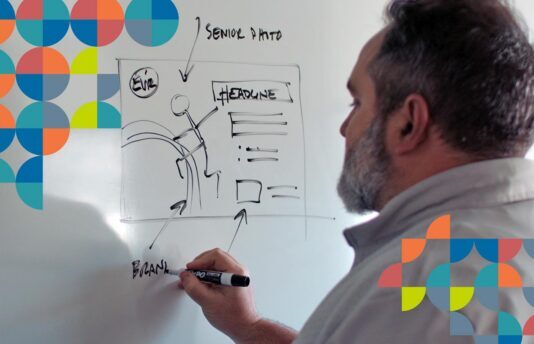
A sitemap is the blueprint for the website. It outlines every page and shows how users move through the site.
This step helps:
- Organize content logically
- Define the user journey and improve navigation
- Support SEO and crawlability
- Identify missing content early
Good structure matters for both users and search engines. If visitors can’t quickly find what they need, they leave. Search engines notice that behavior too.
One of the biggest mistakes organizations make is structuring content around internal departments instead of audience needs. A better approach is organizing pages around how real users search and think; whether they’re prospects, families, recruits or partners.
Why Does Content Hierarchy Matter?
People don’t read websites word for word. They scan.
That’s why content hierarchy matters. Headlines, subheadings and page structure help users quickly understand what’s important and where to go next.
Strong hierarchy also improves:
- Scannability – Makes it easier for users to quickly find key information without reading everything in order.
- User experience (UX) – Creates a clearer, more intuitive flow so users can navigate content with less effort or confusion.
- Accessibility and ADA compliance – Supports inclusive design by ensuring content structure is logical and perceivable for all users.
- Screen reader functionality – Allows assistive technologies to interpret and announce content in the correct order, improving usability for visually impaired users.
Clear messaging matters too. Calls-to-action like “Request a Quote” or “Schedule a Tour” should feel natural, visible and consistent throughout the site.
If users have to hunt for the next step, they probably won’t take it.
In fact, 70% of small business websites lack a clear call-to-action or optimized structure.
Why Should SEO Be Built in Early?
SEO is not something you tack on after launch.
A strong SEO strategy helps shape a website from the beginning, influencing:
- Page naming
- Navigation structure
- Keyword mapping
- Internal linking
- Content planning
- Technical performance
For example, if a senior living community wants to rank for “assisted living in Portsmouth, NH,” that goal should influence how the site is organized and written from day one. Key phrases should appear naturally in page titles, headings and website copy. Supporting content answers questions prospective residents and families are already asking, such as what assisted living includes, who it is best suited for and what life is like in Portsmouth.
Technical SEO plays an important role as well. That includes mobile-friendly design, fast-loading pages, optimized meta-data and a user experience that makes it easy for visitors to find information and take the next step.
Internal linking is another critical component, helping search engines understand the relationship between pages while guiding visitors to relevant content throughout the site.
Too many organizations launch visually impressive websites that look great but fail to attract qualified traffic.
And the payoff is real. According to HubSpot, meaningful SEO growth typically takes several months of consistent effort, making it critical to build search optimization into a website from the beginning rather than treating it as an afterthought.
Design Still Matters—Just at the Right Time
Good design absolutely matters. But it works best when it’s built on a solid strategic foundation.
When goals, messaging and structure are clear, design becomes more focused and effective. The visuals support the experience instead of trying to carry it.
The best websites happen when strategy, SEO, content and design all work together from the start.
Build the Foundation First
A website that performs well starts with structure, clarity and user intent—not just visuals.
Design is important. But strategy is what gives the site direction.
Good design gets attention. Smart strategy gets results.
Planning a new website? Connect with EVR Advertising to build a website strategy that works before the first pixel is placed.