Let’s not talk about the game.
We’re a Patriots office. We’re still emotionally hydrating.
So instead, let’s talk about the other main event—the one we actually get paid to analyze.
Because while the scoreboard hurt, the commercials?
They weren’t exactly a blowout either.
For a night that’s supposed to be advertising’s biggest creative showcase, a surprising number of spots felt safe… chaotic… or like someone said, “make it viral” and hoped for the best.
And considering what brands paid to be there, that’s a tough pill to swallow.
What $8 Million Buys You
Before we get into the hits and misses, let’s set the stakes.
The Super Bowl isn’t just another media buy.
It’s the last true everyone’s-watching-at-the-same-time moment in American culture.
This year delivered 120+ million viewers, making it one of the largest live audiences on the planet.
That kind of attention?
It costs.
- $8 million for a 30-second national spot (That’s $266,000 per second!)
- Plus $2–5+ million (or more) in production
- Add celebrities, effects, teasers, social, influencers… and campaigns easily hit eight figures
That’s lake-house money. For one commercial.
So, when a commercial flops?
It’s not just a miss—it’s an $8 million fumble.
And when one works?
That’s the kind of ROI marketers dream about all year.
Which makes the creative bar very, very high.
Here’s who cleared it and who tripped on the way out of the tunnel.
SCORES—The Ones We’d Actually Rewatch
Lay’s—The Father–Daughter Farm Story
Why it worked:
In a night full of CGI chaos and celebrity pileups, Lay’s did something radical: told a human story.
A dad. A daughter. A farm. A dog.
That’s it. And honestly? That’s enough.
It felt warm, cinematic and genuine—not like a brand trying to manufacture feelings in a focus group. You almost forgot you were watching a chip commercial.
Marketing takeaway:
Emotion beats spectacle. Every time.
DoorDash—50 Cent “Beefs”
Why it worked:
Celebrity self-awareness is undefeated.
50 Cent poking fun at his own “beefs” while DoorDash turns it into literal food humor? Smart. Playful. Shareable.
Most importantly, he looked like he actually wanted to be there—which sounds small but makes a huge difference. Within minutes, it felt meme-ready.
Marketing takeaway:
If you hire talent, let them be themselves. Forced scripts kill good ideas fast.
Budweiser—Clydesdales / Americana Spot
Why it worked:
Budweiser knows its lane and stays in it.
No trend-chasing.
No robots.
No “hello, fellow kids” energy.
Just heritage, heart and horses.
It’s nostalgic without feeling stale—which is incredibly hard to pull off. While other brands zigged into gimmicks, Bud quietly delivered something timeless. Just as they always do.
Marketing takeaway:
Consistency builds brand equity. Reinvention isn’t always required.
Pringles—Sabrina Carpenter “Pringleleo”
Why it worked:
This wasn’t just a celebrity cameo—it was a mini story.
Sabrina Carpenter literally builds her dream guy out of stacked Pringles (yes, really), turning the brand’s most iconic product feature into the punchline. It’s weird, playful and self-aware—and most importantly, memorable.
Instead of flashing product shots, Pringles gave the chips character and leaned into narrative. That’s what makes a snack ad stick.
Marketing takeaway:
Turn your product truth into the joke. Story > stunt.
🤏 ALMOST NAILED IT—Great Pieces, Messy Execution
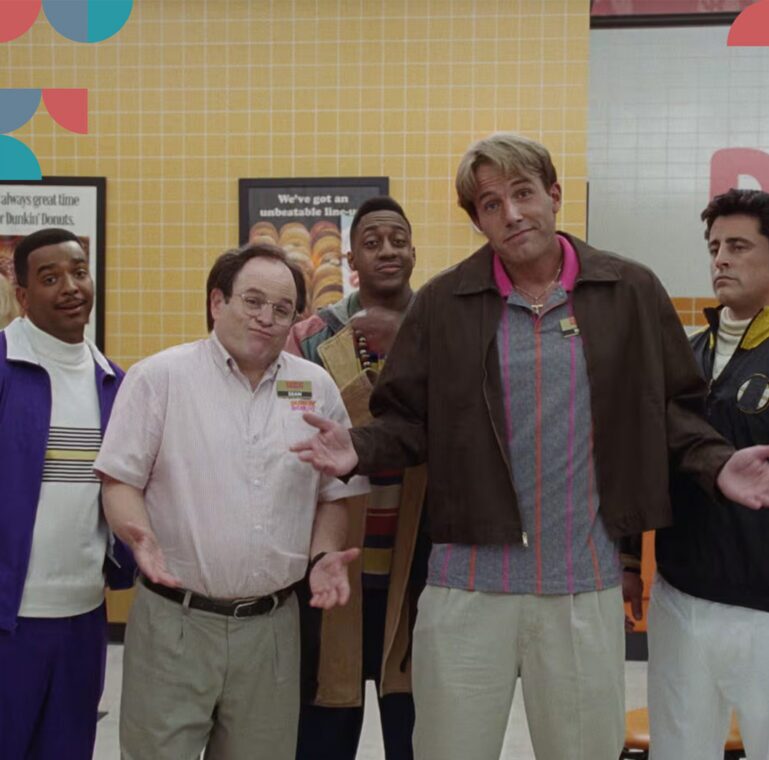
Dunkin’— Good Will Dunkin’”
Fun concept. Big Boston energy. Plenty of local pride.
But it tried to cram every joke, reference and cameo into 30 seconds. Instead of one sharp punchline, we got five medium ones.
It’s like ordering everything on the menu at once. Nothing stands out.
Marketing takeaway:
Edit harder. Focus wins.
MISSES—Total Fumbles
Svedka—“Shake Your Bots Off”
What happened:
AI-generated dancing robots.
That’s basically the plot.
It looked expensive. It just didn’t feel like anything.
No story. No emotional hook. No reason to care about the vodka. It felt like a brand chasing headlines instead of building connection.
Marketing takeaway:
AI is a tool, not a concept.
Alexa—“Scary Good”
What happened:
When your smart home assistant feels like the villain in a horror movie… that’s not great positioning.
Instead of helpful, it felt slightly terrifying. Which is not what you want from the device listening in your kitchen.
Marketing takeaway:
Don’t accidentally make your product the bad guy.
The “Too Many Celebrities, Not Enough Point” Category
(You know the ones.)
Five cameos. Three jokes. Zero clarity.
Entertaining? Sure.
Memorable for the brand? Not really.
It’s the advertising equivalent of throwing every play in the book at once.
Marketing takeaway:
Star power ≠ strategy.
🏁 Final Whistle
After watching them all, a pattern was pretty clear:
The winners:
✔ Human
✔ Simple
✔ Emotion or humor first
✔ Clear brand connection
The losers:
✖ Trend-chasing
✖ Overproduced
✖ Too many ideas
✖ Trying way too hard
Which feels like a good reminder for all of us in marketing.
You don’t need $8 million to make something people remember.
You need a good idea.
Super Bowl budgets are optional. Being memorable isn’t. That’s where we come in. Let’s connect.